“How much is Hajj 2027?” is one of the most searched Hajj questions. The honest answer: it depends on your passport and your booking route. When we checked on 21 November 2026, the Nusuk Hajj platform had not yet opened its 1448 packages, and Saudi domestic prices for 1448 had not been published either.
Some countries run their own official Hajj systems, and those authorities publish figures on their own sites when they are ready. This post does not quote unofficial “from” prices or operator estimates. Instead it gives you a method for checking any Hajj price once packages are released, so you pay the right amount to the right party for the right services.
Where official prices appear
Look only on the official channel that applies to your route. The binding price is the one shown there at the time you book, not a figure in an email, a PDF or a WhatsApp message.
Living in a country served by Nusuk Hajj: wait for packages to open on hajj.nusuk.sa, then compare categories and providers on the platform itself.
Living in Saudi Arabia: watch the Nusuk app or nusuk.sa for domestic packages, and announcements from the Ministry of Hajj and Umrah.
Living in a country with its own Hajj system: use your national Hajj authority and the operators it licenses. Examples include the Pak Hajj app or hajj.mora.gov.pk for Pakistan, and MUIS for Singapore. Check the figure on that official site; do not rely on a third-party list.
Prices only mean something on the channel that applies to you:
Living in Saudi Arabia: the Nusuk app or nusuk.sa (domestic packages).
Living in a country served by Nusuk Hajj: hajj.nusuk.sa.
Living in a country with its own Hajj system: your national Hajj authority and the operators it licenses.
Step 2: Find the price on the platform itself
On Nusuk Hajj and on the domestic Nusuk platform, the packages and prices are listed on the platform. If someone sends you a price in a PDF or a WhatsApp message, find the same package on the official platform and compare.
The domestic platform in 1447 used a booking invoice paid through SADAD. The Ministry said invoices could be paid within 72 hours until 27/11/1447, and the window then shortened to 6 hours, with unpaid bookings cancelled automatically. The 1448 rules may differ, but the principle is the same: you pay through the official system, not to a person.
Step 3: Compare like with like
Two “Hajj packages” can differ hugely in what they include. Before comparing prices, line up:
Check
Why it changes the price
Category (Luxury / Premium / Standard)
Hotel star rating in Makkah and Madinah
Shifting or non-shifting
One hotel, or a Mashair base plus a Makkah hotel
Makkah zone (A, B, C, M)
Walking distance to the Haram
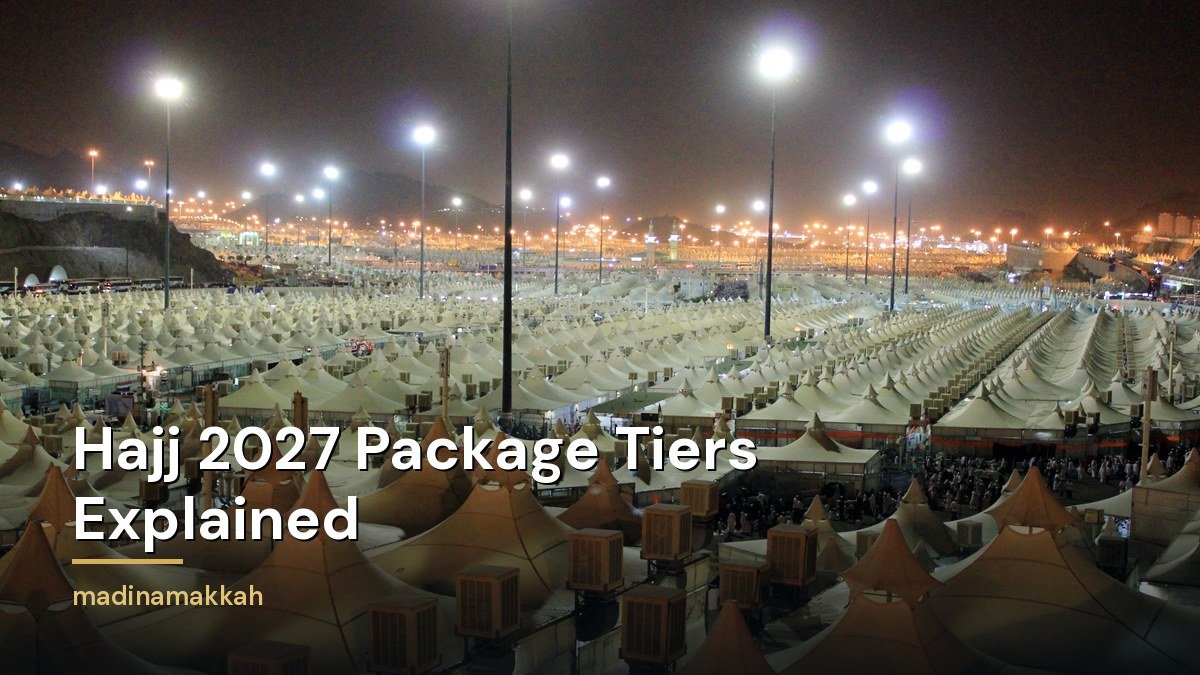
Mina camp
In 1447: Majar Al-Kabsh (~300–700 m from the Jamarat) or Al-Muaisim (~4 km)
Room type
Quad, triple, double or single
Days
Minimum stays differed by type in 1447 (6, 10 or 14 days)
Flights
Included or not, and from which city
Transport between cities
Bus (up to about 9 hours), train or flight
Meals
Full board, partial, or Mashair days only
Sacrifice (adhahi)
Included or extra
Extras
SIM, tours, other services
A cheaper package that leaves out flights or the sacrifice can end up costing more.
Step 4: Check the provider
Every package should name a provider. Check that provider against the platform’s official Service Providers list (international) or the licensed companies shown in the Nusuk app (domestic). If the company doesn’t appear, don’t pay.
Step 5: Read the cancellation terms before you pay
For domestic pilgrims in 1447, the Ministry announced that cancellations before the permit was issued, and up to 30/10/1447, carried no deduction. Set deductions applied after the permit was issued, and payments were not refundable for cancellations from 01/12/1447 onwards. Expect 1448 to have its own schedule. Read it and screenshot it.
Step 6: Watch for the warning signs
A price far below similar official packages.
Pressure to pay today “before the quota closes”.
Payment to a personal bank account or by cash transfer.
“Guaranteed” places before official booking opens.
No package listing you can find on the official platform.
How to budget before prices are out
While you wait, you can still prepare:
Decide which category you are realistically aiming for.
Save towards it now, with a buffer for flights, vaccinations, travel insurance and spending money.
Note costs most packages don’t cover: getting to your departure airport, personal shopping, and any days you add on.
Talk honestly with family about who is going and who is paying. Money stress in a group is better handled at home than in a tent in Mina.
A psychologist’s note on price anxiety
Big, uncertain costs make people anxious, and anxiety tends to push us towards either rushing or freezing. Neither helps. A written budget, one official website to watch, and a rule that you never pay outside it are three simple habits that take the pressure off.
FAQ
What is the cost of Hajj 2027?
Nusuk Hajj had not opened its 1448 packages as of 21 November 2026, and no official Saudi domestic 1448 price list had been published either. Some national Hajj authorities publish their own official figures on their sites. Prices depend on category, type, zone, camp, room, days and inclusions. Check the official platform for your route.
Are online price lists reliable?
Only if they match the same package on the official platform for your route.
Can I pay a deposit to an agent to “hold” a place?
Don’t pay outside the official system for your route. Places are secured through official booking and payment.
Ihram is the sacred state a pilgrim enters to perform Hajj or Umrah. It begins with an intention and the talbiyah, and for men it is marked by two simple white cloths. If you have performed Umrah, ihram will feel familiar. For Hajj there are a few differences in timing, especially if you perform tamattu’. This guide covers them.
What ihram is
Ihram is not just the clothes. It is a state you enter with:
an intention (niyyah) in the heart to perform Hajj (or Umrah, or both)
the talbiyah, said aloud by men and quietly by women, as scholars teach
The official Nusuk Hajj guide puts it simply as the first step: start “with a sincere intention to enter the state of Ihram and engage in the rituals of Hajj, with the recitation of the Talbiyah. Then, put on the Ihram garments.”
Tamattu’: at the miqat, you enter ihram for Umrah. After Umrah you leave ihram. You then enter ihram for Hajj again, usually on 8 Dhu al-Hijjah (expected around Friday 14 May 2027, depending on the moon sighting; check the official announcement), from where you are staying in Makkah, before going to Mina. A narration in Sahih al-Bukhari describes Companions staying out of ihram “till the day of Tarwiya” and then assuming ihram for Hajj (Sahih al-Bukhari 1568).
Qiran and ifrad: you enter ihram for Hajj (with Umrah, in qiran) at the miqat and stay in it until the Day of Eid.
If you are travelling from Madinah, your miqat is Dhul Hulayfah, which the Prophet ﷺ set for the people of Madinah (Sahih al-Bukhari 1524). Our sister site explains the journey: Madinah to Makkah for Hajj. For the miqat points in general, see miqat for Umrah.
Before you enter ihram
Many pilgrims, following the Sunnah as scholars describe it:
take a bath (ghusl)
trim nails and remove unwanted hair beforehand, since they can’t be cut in ihram
men apply perfume to the body (not the ihram cloths) before ihram. Aisha said: “I used to scent Allah’s Messenger (ﷺ) when he wanted to assume Ihram” (Sahih al-Bukhari 1539; Sahih Muslim 1189)
pray, and then make the intention
The talbiyah
Ibn Umar reported the talbiyah of the Prophet ﷺ (Sahih al-Bukhari 1549; Sahih Muslim 1184):
Labbaika Allahumma labbaik, labbaika la sharika laka labbaik, inna-l-hamda wan-ni’mata laka wal-mulk, la sharika lak.
“I respond to Your call O Allah, I respond to Your call, and I am obedient to Your orders, You have no partner, I respond to Your call All the praises and blessings are for You, All the sovereignty is for You, And You have no partners with you.”
Pilgrims repeat it often from the start of ihram. Practise it at home now so it comes easily on the day.
What men and women wear
Men wear two unstitched cloths, one around the waist and one over the shoulders, and sandals that leave the ankles uncovered. The Prophet ﷺ said the person in ihram “should not wear a shirt, a turban, trousers, a headcloak or leather socks”, and should not wear clothes scented with saffron or wars (Sahih al-Bukhari 1542; Sahih Muslim 1177).
Women wear their normal modest clothing. Scholars explain that no special garment or colour is required. The Prophet ﷺ said a woman in ihram “should not cover her face, or wear gloves” (Sahih al-Bukhari 1838). Scholars explain how a woman may lower a cloth in front of her face in the presence of men who are not her mahram. For more, see what women wear in ihram.
The main restrictions in ihram
Once in ihram, a pilgrim avoids:
Cutting or removing hair or nails. “Do not shave your heads until the sacrificial animal has reached its place of slaughter” (Qur’an 2:196).
Perfume on the body or clothes, and scented soaps, as scholars explain from Sahih al-Bukhari 1542.
Covering the head (men) and covering the face with a niqab or wearing gloves (women).
Sexual relations and anything leading to them. “There is [to be for him] no sexual relations and no disobedience and no disputing during ḥajj” (Qur’an 2:197).
Marriage contracts and proposals. “A Muhrim must neither marry himself, nor arrange the marriage of another one, nor should he make the proposal of marriage” (Sahih Muslim 1409).
Hunting land animals. “Do not kill game while you are in the state of iḥrām” (Qur’an 5:95); game from the sea is lawful, but “forbidden to you is game from the land as long as you are in the state of iḥrām” (Qur’an 5:96).
Arguing, insults and bad behaviour, per Qur’an 2:197.
According to many scholars, using unscented soap, changing ihram cloths, using an umbrella, wearing a watch or glasses, and taking needed medicine are allowed. Ask your group’s scholar about specific cases.
What if I break a restriction by mistake?
Many things done by forgetting or by genuine ignorance carry no penalty, according to many scholars. For acts done out of need, such as shaving because of an ailment of the head, the Qur’an mentions “a ransom of fasting [three days] or charity or sacrifice” (Qur’an 2:196). Deliberate violations have their own rulings, which scholars explain and the schools differ on. Don’t panic and don’t guess. Tell your group’s scholar exactly what happened and follow the guidance.
When does ihram end?
Ihram for Hajj ends in two stages, as scholars explain:
First release, on the Day of Eid (expected around 16 May 2027, depending on the moon sighting), commonly explained as coming after you stone Jamrat al-Aqabah and shave or trim your hair. The schools differ on exactly which acts bring it. Most restrictions lift, but marital relations remain forbidden.
Full release, after Tawaf al-Ifadah (and sa’i, where required). Aisha said she perfumed the Prophet ﷺ “on finishing Ihram before the Tawaf round the Ka’ba (Tawaf-al-ifada)” (Sahih al-Bukhari 1539).
Details of the order on the 10th vary between schools. Your group will guide you.
Ihram and the mind
As a psychologist, I find ihram one of the most beautiful parts of Hajj. You set aside the clothes that show status, job and nationality, and stand like everyone else. It can feel exposing at first, especially for people who rely on their appearance for confidence. That discomfort is worth noticing. Let it remind you that what Allah looks at is the heart.
Practically: try on your ihram at home, walk in it, sleep in it for a night. Familiarity lowers anxiety, and your attention on the day can go to worship rather than to the cloth slipping off your shoulder.
FAQ
Can I put on the ihram cloths at home and make the intention at the miqat?
Yes, many pilgrims dress at home or at the airport, and make the intention at or before the miqat. On a flight, make it before the plane passes the miqat.
Where do tamattu’ pilgrims enter ihram for Hajj?
Usually from their place in Makkah on 8 Dhu al-Hijjah, as scholars explain. Your group will tell you the time.
Can I use a belt or a bag in ihram?
Generally yes, according to many scholars. Ask your group’s scholar if unsure.
By Dr. Malik Sherjeel Awan, PsyD · Last checked 22 November 2026 · Confirm the rulings for your situation with a qualified scholar
Published by Dr. Malik Sherjeel Awan, Makkah
If you are preparing for Hajj 2027, you will soon hear three Arabic words: tamattu’, qiran and ifrad. They describe the three ways of performing Hajj. All three are valid, and all three were performed by the Companions with the Prophet ﷺ on his Farewell Hajj. This guide explains them simply, so the words stop feeling like a test.
Aisha (may Allah be pleased with her) described that Hajj: “Some of us had assumed Ihram for Umra only, some for both Hajj and Umra, and others for Hajj only” (Sahih al-Bukhari 1562). Those three groups are the three types.
The three types at a glance
Tamattu’
Qiran
Ifrad
Intention at the miqat
Umrah
Umrah and Hajj together
Hajj only
Umrah before Hajj?
Yes, a full Umrah, then leave ihram
Combined with Hajj in one ihram
No Umrah in this ihram
Leave ihram between Umrah and Hajj?
Yes
No, stay in ihram until the 10th
No, stay in ihram until the 10th
New ihram for Hajj?
Yes, usually on 8 Dhu al-Hijjah
No
No
Sacrifice (hady)
Required (Qur’an 2:196)
Required, as the major schools derive from 2:196
Not required (voluntary)
If you cannot offer the hady
Fast 3 days during Hajj and 7 at home (Qur’an 2:196)
Same, as scholars explain
Not applicable
Tamattu’: Umrah, a break, then Hajj
Tamattu’ means “enjoyment”, because the pilgrim enjoys a break from ihram restrictions between Umrah and Hajj.
Enter ihram for Umrah at the miqat, during the months of Hajj.
Perform Umrah: tawaf, sa’i, and shaving or trimming the hair.
Leave ihram and live normally in Makkah.
On 8 Dhu al-Hijjah (expected around 14 May 2027, depending on the moon sighting; check the official announcement), enter ihram again for Hajj and go to Mina.
Offer the hady (sacrifice) on or after the Day of Eid.
The Qur’an describes it: “whoever performs ʿumrah [during the ḥajj months] followed by ḥajj [offers] what can be obtained with ease of sacrificial animals. And whoever cannot find [or afford such an animal] – then a fast of three days during ḥajj and of seven when you have returned [home]” (Qur’an 2:196).
A narration in Sahih al-Bukhari describes Companions who finished their Umrah and stayed out of ihram “till the day of Tarwiya”, then assumed ihram for Hajj (Sahih al-Bukhari 1568). On the Farewell Hajj, the Prophet ﷺ told those who had not brought sacrificial animals to make their ihram an Umrah and come out of it (Sahih al-Bukhari 1785).
Who usually performs it: many pilgrims who arrive in Makkah days or weeks before Hajj choose tamattu’, because staying in ihram for a long time is hard. Your group will tell you which type its schedule is built around.
Qiran: Umrah and Hajj in one ihram
Qiran means “joining”.
Enter ihram at the miqat with the intention of Umrah and Hajj together.
On arrival, perform tawaf (and sa’i, as your school explains).
Stay in ihram until the Day of Eid, then complete the Hajj rites.
Offer the hady.
Aisha’s narration says those who had entered ihram for Hajj, or for Hajj and Umrah together, did not leave ihram until the day of sacrifice (Sahih al-Bukhari 1562). The Prophet ﷺ, who had brought sacrificial animals, said he could not finish his ihram until the hady reached its place of slaughter (Sahih al-Bukhari 1568; see also 1785). Scholars discuss whether his own Hajj is best described as qiran or another type.
Who usually performs it: pilgrims who arrive close to the Hajj days, or who have brought or arranged a sacrifice and choose this form.
Ifrad: Hajj on its own
Ifrad means “single”.
Enter ihram at the miqat for Hajj only.
On arrival, perform the arrival tawaf (tawaf al-qudum). Your group or scholar will explain when to perform sa’i.
Stay in ihram until the Day of Eid.
No hady is required, although a voluntary one is allowed.
Who usually performs it: some residents of the Makkah area, pilgrims who have already performed Umrah, and anyone who follows a school or teacher who prefers it.
Which one is best?
The classical schools of fiqh hold different views on which type is most virtuous. Each view rests on its reading of the narrations of the Farewell Hajj. You do not need to settle that debate to perform a valid Hajj. Respect other pilgrims’ choices, and follow a scholar you trust.
A practical note: the Qur’an says the tamattu’ sacrifice “is for those whose family is not in the area of al-Masjid al-Ḥarām” (Qur’an 2:196). If you live in or near Makkah, ask a scholar how this applies to you.
How to decide for Hajj 2027
Ask your group or package provider which type its schedule assumes. Your arrival date matters most.
Be honest about stamina. Staying in ihram for many days in heat is hard for some people.
Plan for the hady. In tamattu’ and qiran it is required. Many packages arrange it. Check what yours includes.
Make your intention clearly at the miqat, in your heart, and say it in words if your school teaches that.
Write down the steps for your type and keep them in your pocket.
The Prophet ﷺ said: “Learn your rituals (by seeing me performing them)” (Sahih Muslim 1297). Learning the steps in advance is part of that.
Calm for the anxious pilgrim
Many people worry: “What if I choose wrongly?” That fear is understandable, but the three types are all valid ways of performing one act of worship. Choose with knowledge, make your intention, and then let the worry go. If you make a mistake, ask a scholar what to do. Most errors have a known remedy. Anxiety is easier to carry when you know that.
FAQ
Do I have to choose before I travel?
You make the intention at the miqat. In practice, decide beforehand with your group so your schedule fits.
Can I change from qiran or ifrad to tamattu’?
Scholars discuss this, drawing on the Farewell Hajj narrations. Ask a qualified scholar before changing.
Is the sacrifice included in my package?
Some packages include it and some don’t. Check your package sheet.
I am a resident of Makkah. Which type should I perform?
Ask a scholar, because Qur’an 2:196 links the tamattu’ sacrifice to those whose family is not near al-Masjid al-Haram.
When Hajj packages go live, the first screen can look like a wall of labels: Luxury Shifting, Premium Non-Shifting, Zone B, Majar Al-Kabsh. This post decodes those labels using the categories the Nusuk Hajj platform published for the 1447 (2026) season, so you can compare 1448 packages calmly when they appear.
Important: The 1448 (2027) package details had not been released on 21 November 2026. Everything below describes the 1447 framework and may change. We give no prices, because no official 1448 prices exist yet.
The three package types
The platform described three kinds of package:
All-inclusive. Covers the essentials for the whole journey: visa issuance, flights, accommodation in Makkah and Madinah, catering, transport between cities, Mashair services (Mina, Arafat, Muzdalifah) and guidance.
Non-shifting. You keep one Makkah accommodation for your whole stay, before and after the Hajj days, so you don’t have to move your luggage.
Shifting. You stay in accommodation close to the Mashair during the Hajj days, plus a second Makkah accommodation before or after Hajj, usually near Masjid al-Haram.
Minimum durations in 1447 were 6 days for Mashair packages, 10 days for non-shifting and 14 days for shifting packages. Providers could offer longer stays.
The six categories (1447)
Category
Makkah hotel
Shifting accommodation
Madinah hotel
Minimum stay
Luxury
5-star
none
5-star
10 days
Premium
4-star
none
4-star
10 days
Standard
3-star or residential building
none
3-star or residential building
14 days
Luxury Shifting
5-star
5-star, 4-star or residential building
5-star
14 days
Premium Shifting
4-star
4-star, 3-star or residential building
4-star
14 days
Standard Shifting
3-star or residential building
3-star or residential building
3-star or residential building
14 days
For every category in 1447, the listed Mina camp was Majar Al-Kabsh or Al-Muaisim.
Mina camps: what the names mean
Your Mina camp is where you spend most of the Hajj days, and its distance from the Jamarat affects how much you walk. The platform described:
Majar Al-Kabsh: about 300 to 700 metres from the Jamarat Bridge, with capacity for about 5,000 pilgrims.
Al-Muaisim: about 4 km from the Jamarat Bridge, with capacity for up to 44,000 pilgrims.
Four kilometres each way, in May heat and among crowds, is a real consideration for older pilgrims or anyone with limited mobility. Ask your provider exactly how pilgrims get to the Jamarat from their camp, and how long it usually takes.
What about Arafat?
The 1447 category table did not set separate Arafat tiers. Arafat services come under the Mashair services in your package. Ask the provider directly about the tent type, cooling, meals and transport timings for the Day of Arafah. This is the most important day of Hajj, so get the answers in writing.
Makkah zones
To help pilgrims compare hotels, the platform split Makkah into zones:
Zone A: very close to Masjid al-Haram, often overlooking its courtyards, within walking distance.
Zone B: around Zone A. Still walkable, a little farther, and some hotels run shuttles at prayer times.
Zone C: the largest area, not within walking distance of the Haram or the Mashair. Some hotels offer prayer-time shuttles.
Zone M: close to the Mashair, for easy access during your stay in Mina.
Rooms: expect to share
Because demand peaks in Hajj season, the platform warned that most rooms are shared. A package usually includes one bed in a double, triple or quadruple room. Some providers may offer single rooms. Providers try to respect rooming preferences, but your choice of roommates is not guaranteed.
If you travel with family, ask before you book how families are roomed and whether men and women are housed separately.
Transport between Makkah and Madinah
The platform notes the trip is about 450 km, and by bus, the default in most packages, it can take up to 9 hours. Some providers offer upgrades such as the Haramain High-Speed Railway, domestic flights or private cars.
Extras
Providers may add services such as SIM cards, the sacrifice (adhahi) and educational tours. These may be included in the price or charged separately. Ask which applies.
How to read a package sheet: a checklist
Category and type: Luxury, Premium or Standard? Shifting or non-shifting?
Hotel names and zones in Makkah, and the hotel in Madinah.
Mina camp: Majar Al-Kabsh or Al-Muaisim (or whatever is listed for 1448).
Room type: quad, triple, double or single.
Days: total length, and dates in each city.
Transport: bus, train or flight between cities.
Meals: which days and which meals.
Sacrifice: included or extra.
Cancellation terms.
Provider: check the company on the platform’s official Service Providers list.
A word on choosing with a clear head
People sometimes feel a higher tier is more “worthy”. It isn’t. The rites are the same in every tent. Pick the tier that fits your health, your budget and the people you travel with, then put your energy into preparing yourself.
FAQ
Which tier is closest to the Jamarat?
In 1447, the Majar Al-Kabsh camp (about 300–700 m) was closer than Al-Muaisim (about 4 km). Check the 1448 listings.
Does Luxury guarantee a single room?
No. The platform says single rooms may be offered by some providers, but most rooms are shared.
Is a shifting package better?
It depends. Shifting gives you a base near the Mashair during the Hajj days but means moving accommodation. Non-shifting keeps you in one Makkah hotel.
By Dr. Malik Sherjeel Awan, PsyD · Last checked 20 November 2026 · Recheck every item against official sources before you fly
Published by Dr. Malik Sherjeel Awan, Makkah
Paperwork is not the spiritual heart of Hajj, but a missing paper can stop you at an airport or a checkpoint. This checklist gathers the documents pilgrims usually need, so you can work through them calmly over the coming months and tick them off one by one.
Important: the Hajj 1448 (2027) requirements had not been published as of 20 November 2026. The health items below follow the Saudi Ministry of Health’s 1447 (2026) document. Your official route, whether Nusuk Hajj, your national Hajj body or a domestic package, may ask for more. Treat this as a starting list and confirm each item.
1. Passport
[ ] Valid long enough. The UK government’s travel advice for Saudi Arabia says a passport must be valid for at least six months after the date you arrive. Check what your own route requires and renew early if in doubt.
[ ] Name matches everywhere. Your name on your Hajj account, visa and tickets should match your passport exactly.
[ ] Clear colour scan saved on your phone and in email.
[ ] If you renew your passport after registering, update your details on your official platform straight away.
2. Hajj visa or domestic Hajj permit
[ ] Pilgrims from abroad: a Hajj visa issued through your official route. A tourist, Umrah, visit or business visa does not allow Hajj.
[ ] Residents of Saudi Arabia: a confirmed domestic Hajj package and permit through Nusuk, plus a valid Iqama.
[ ] A printed or saved copy of the visa or permit.
[ ] Your package confirmation showing the provider, category, dates, hotels and camp.
[ ] Flight tickets (if not part of the package).
[ ] The contract and refund terms.
[ ] Your group leader’s name and phone number in Makkah.
4. Nusuk card
[ ] In 1447, the Ministry of Hajj and Umrah said carrying and activating the Nusuk card was mandatory for entry into Makkah, the holy sites and the Prophet’s Mosque, including the Rawdah. It came in digital and paper form, and many pilgrims received it in their home country before arrival.
[ ] Know how your group will issue it to you, and keep it on you at all times during Hajj.
5. Vaccination certificates
Based on the 1447 MOH requirements:
[ ] Meningococcal vaccine (ACYW), required for everyone. A conjugate vaccine (ACYW, or the pentavalent ACYWX) received within the last 5 years, or a polysaccharide vaccine within the last 3 years, in both cases at least 10 days before arrival. The certificate should show the vaccine name and date. If the type isn’t stated, the MOH treats it as valid for 3 years only.
[ ] COVID-19: in 1447, proof of vaccination or immunity was required for specific groups. Check whether it applies to you.
[ ] Polio and yellow fever: required only for travellers from listed countries. The lists change, so check the current MOH document.
[ ] Recommended: seasonal flu vaccine, and being up to date with routine vaccines.
Book vaccinations with your doctor early, and keep the original certificate plus a photo of it.
6. Health documents
[ ] Pilgrims’ health status certificate. The 1447 MOH document included a form, signed by a doctor and approved by the health authority and Hajj office in your country, confirming that the pilgrim does not have conditions such as kidney failure needing dialysis, heart failure with symptoms at rest or minimal effort, chronic lung disease needing oxygen, advanced liver cirrhosis, severe neurological or psychiatric disease that impairs cognition, dementia, late or high-risk pregnancy, active infectious disease of public-health concern, or active cancer under strong treatment. Ask your official route how it handles this form.
[ ] Medical summary if you have a chronic condition. The MOH advises carrying documentation of your condition.
[ ] Prescriptions and enough medication for the whole trip, in original packaging, as the MOH recommends.
[ ] Health insurance details, if your package includes cover or you have bought it separately.
7. Identity and contact papers
[ ] A card in your pocket with your name, passport number, group name, hotel, camp number and emergency contact.
[ ] Passport photos (a few spares).
[ ] For residents: your Iqama or digital ID, and your National Address details.
[ ] Emergency numbers saved: 911 (unified emergency number in Makkah and Madinah regions) and 937 (MOH health line).
8. Money and cards
[ ] A bank card that works abroad, and your bank’s emergency number.
[ ] Some cash in riyals for small purchases.
9. Copies and backups
[ ] Photos of every document in a secure folder on your phone.
[ ] The same copies emailed to yourself.
[ ] One set of paper copies kept separate from the originals.
Put all your Hajj documents in one waterproof pouch that lives in the same place every day. Before you leave your room, touch the pouch. It sounds small, but routines like this reduce anxiety, because your mind no longer has to keep checking. When your hands know where everything is, your heart is freer for worship.
The Qur’an’s advice for Hajj is practical: “take provisions, but indeed, the best provision is fear of Allāh” (Qur’an 2:197). Good preparation is part of taking provisions.
FAQ
How long must my passport be valid for Hajj?
For entry to Saudi Arabia, the UK government’s advice is at least six months after arrival. Your official route may set its own rule, so check it.
When should I get the meningitis vaccine?
In 1447, at least 10 days before arrival, with a conjugate vaccine valid for 5 years or a polysaccharide vaccine valid for 3 years.
Do I need the Nusuk card?
In 1447 it was mandatory for entry to Makkah, the holy sites and the Prophet’s Mosque. Expect the same for 1448 and confirm with your group.
Is a printed copy of my visa enough?
Carry your original passport and follow your group’s instructions. Copies are backups, not replacements.
General information only. Documents and health rules change each season. Confirm with the Saudi MOH, your official Hajj route and your doctor before you travel.
If you live in a country served by Saudi Arabia’s Direct Hajj programme, the Nusuk Hajj platform at hajj.nusuk.sa is the official way to book. This walkthrough explains each stage so the process doesn’t catch you off guard when the 1448 (2027) season opens.
Where things stand today: On 15 November 2026, the platform still showed the 1447 season, and no official date had been announced for 1448 account registration or package booking. The steps below follow the 1447 platform. They will probably look similar for 1448, but check the live site. We will update this post when the 1448 portal opens.
First, check that Nusuk Hajj is your route
Nusuk Hajj is run under the Ministry of Hajj and Umrah for countries with Muslim minorities that do not have official Hajj missions. The Ministry approves the companies, sets up the packages, monitors service quality and reviews prices. The list of eligible countries is published each year on the platform’s Serviced Countries page.
The platform set out ten steps. Here is what each one involves in practice.
1. Create an account
Sign up on hajj.nusuk.sa with your email address and phone number. Use an email you check every day, because updates and verification messages go there. Type your name exactly as it appears in your passport.
2. Upload your documents
The platform asks you to upload documents. At minimum, expect your passport and a personal photo, but follow the exact list the live site shows. Scan clear colour copies ahead of time and keep them in one folder.
3. Fill in the application
You will be asked for personal details and, if you are booking as a group, the people travelling with you. Take your time. Mismatched spellings and dates cause most of the delays later on.
4. Application verification
The platform checks the data you submitted. Its FAQ says the data will be verified and you will be notified of updates. Registration is not acceptance. The FAQ states plainly that registering on the platform does not mean you have been accepted for Hajj.
5. Select your preferred category
Choose the package category you are aiming for. In 1447 these were Luxury, Premium and Standard, each in non-shifting and shifting versions. See Hajj 2027 Package Tiers Explained.
6. Top up your eWallet
In 1447, payment ran through a wallet on the platform. Only add money through the platform itself. Never send money to a person or a “Nusuk agent” over WhatsApp or by bank transfer.
7. Browse service providers
The platform lists the authorised service providers. You can check any company you are offered against the official Service Providers page.
8. Select your preferred package
Compare packages on what they include: hotel category and distance from the Haram, shifting or non-shifting, camp location in Mina and Arafat, meals, transport and length of stay.
9. Book your package
Booking is the moment your place is secured, subject to the platform’s terms. Read the cancellation and refund terms before you confirm.
10. Review your itinerary
Check your dates, hotels and transport. Keep screenshots or PDFs of everything.
What to prepare before 1448 opens
Passport: Check how long it remains valid, and renew early if you are unsure.
Photos and scans: Get them ready in the formats usually requested (clear, colour, recent).
Health: For 1447, a meningococcal ACYW vaccination at least 10 days before arrival was compulsory, with conditions for polio and yellow fever depending on where you travel from. Talk to your doctor early.
Budget: Set your ceiling now, using last season’s categories as a guide.
Companions: Agree in advance who is travelling together so you can apply consistently.
Official alerts: Follow official announcements on hajj.nusuk.sa.
Getting help
The 1447 platform listed these support channels: live chat, email (via the “Contact Us” page), official social media, and a 24/7 call centre on +966 9200 31201. Use those, not numbers from adverts or group chats.
A calm approach to the waiting
Hajj registration involves a lot of waiting: for the portal to open, for verification, for packages. Uncertainty like this makes people anxious, and anxious people are easier for scammers to rush. A simple routine helps. Check the official site once a week, keep your documents ready, and make no payments outside the platform. That is enough.
FAQ
Is Nusuk Hajj registration open for 2027?
Not as of 15 November 2026. The site still showed the 1447 season, and no 1448 opening date had been announced. Some travel publications report a “register your interest” form. If you see one on the official site, it is not a booking.
Can I use Nusuk Hajj if I hold a passport from a country with a Hajj mission but live elsewhere?
Eligibility is set by the platform’s country rules. Check the Serviced Countries page and the platform’s terms for the current season, or contact its support channels.
Is the eWallet safe?
Use it only inside hajj.nusuk.sa. Make sure the address ends in .sa and the connection is secure.
Does booking guarantee my visa?
Follow the platform’s instructions after booking. Do not make non-refundable travel plans until your Hajj visa is issued.
One of the most common Hajj mistakes happens before any money changes hands: people try the wrong route. Someone reads “register on Nusuk” online, signs up, and waits months for something that was never going to come, or pays a stranger who claims to have a back door.
Hajj places are organised by where you live, and there are three main routes. This post explains each one without favouring any country or system, so you can find yours quickly.
Route 1: You live in Saudi Arabia (domestic pilgrims)
Saudi citizens and residents with a valid residency permit (Iqama) apply through the Nusuk app or nusuk.sa. This is not hajj.nusuk.sa.
For the 1447 season, the Ministry of Hajj and Umrah announced:
Registration opened on 6 Ramadan 1447, with package booking from 15 Ramadan.
Until the end of Shawwal, priority went to people who had not performed Hajj before.
Applicants had to be at least 15 years old and meet the health requirements.
Residents needed a valid Iqama, and those whose Iqama was issued more than a year earlier had priority.
Contracts were made only with licensed companies listed in the Nusuk app. The pilgrim had to register personally and pay through SADAD before the permit was issued.
The Ministry’s e-service lists the steps: log in to Nusuk with Nafath, complete your profile and eligibility check, add companions, choose a package, pay, and receive your Hajj permit. Questions go to the unified number 1966.
The 1448 dates and rules have not been announced yet. Residents can read more on our sister sites in their Hajj season guides for Makkah residents and Madinah residents.
Route 2: You live in a country served by Nusuk Hajj
hajj.nusuk.sa is the platform for the Ministry’s Direct Hajj programme. The Ministry describes it as serving pilgrims from countries with Muslim minorities that do not have official missions to manage their pilgrims’ affairs. For these countries, the Ministry qualifies the companies, builds the packages, monitors service quality and reviews prices. Pilgrims book directly, without outside intermediaries.
The platform says specific countries are targeted each year, and it publishes them on its Serviced Countries page. Don’t rely on a list copied onto a blog, including this one. Check the official page for the season you are applying for.
Residence, not passport, is the usual test. Travel guides commonly report that eligibility follows your country of residence rather than your nationality. Confirm this on the platform’s terms for 1448, or ask its support team, before you assume either way.
Route 3: You live in a country with its own Hajj system
Most countries with large Muslim populations manage Hajj through their own national body, such as a Hajj ministry, committee, religious affairs authority or licensed national operators. These bodies work within a quota agreed with Saudi Arabia. Each one sets its own:
application window (some close many months before Hajj)
selection method (ballot, queue, priority rules)
payment schedule
list of licensed operators
If this is you, your national authority is your route, not hajj.nusuk.sa. Several national windows for Hajj 1448 opened and closed in mid-2026, so if you live in one of these countries, check your authority’s official website now.
A quick self-check
Your situation
Where to start
I live in Saudi Arabia with a valid Iqama, or I am a citizen
Nusuk app / nusuk.sa (domestic)
My country of residence is on the Nusuk Hajj Serviced Countries list
hajj.nusuk.sa
My country has a national Hajj authority or mission
Your national Hajj authority
I am not sure
Check the Serviced Countries page, then your national authority’s site
What does not work
Visit, tourist or Umrah visas. For 1447, the Ministry of Interior stated that visit visas of every type do not permit Hajj. Violators faced fines of up to SAR 20,000, and residents and overstayers faced deportation and a 10-year ban.
“Special quota” offers from people outside the official routes.
Paying anyone to register you. On the domestic route, the 1447 rules required pilgrims to register themselves.
Why this matters for your peace of mind
Uncertainty is uncomfortable, and when people are uncomfortable they grab the first confident answer, which is exactly what scammers count on. Once you know your route, you can stop scrolling, bookmark one official site, and wait calmly for it to open.
FAQ
I hold one country’s passport but live in another. Which route applies?
Usually the country where you live, but check the 1448 rules on the platform or with your national authority.
Can a Saudi resident book through hajj.nusuk.sa?
Residents of Saudi Arabia use the domestic route (Nusuk app / nusuk.sa), which has its own eligibility rules.
My country isn’t on the Serviced Countries list. Can an agent still get me a Nusuk Hajj place?
Be very cautious. Nusuk Hajj packages are booked on the platform for serviced countries. Ask your national Hajj authority instead.
Hajj 2027 (1448 AH) is about six months away. That sounds like plenty of time, but most of the stress I see in pilgrims comes from doing everything in the last few weeks. This timeline spreads the work out month by month, so each step is small and nothing important is left to chance.
One honest note first. As of 17 November 2026, the Hajj 1448 rules, registration dates and package prices have not been announced. Where this plan mentions a date or rule, it is either a calculated calendar date or last season’s (1447) rule, and it is labelled that way. When the 1448 announcements come, they take priority over anything here.
The expected Hajj 2027 dates
On the Umm al-Qura calendar, the expected dates are:
Event
Hijri date
Expected date
Ramadan begins
1 Ramadan 1448
Monday 8 February 2027
Eid al-Fitr
1 Shawwal 1448
Tuesday 9 March 2027
Dhu al-Qa’dah begins
1 Dhu al-Qa’dah 1448
Thursday 8 April 2027
Dhu al-Hijjah begins
1 Dhu al-Hijjah 1448
Friday 7 May 2027
Day of Tarwiyah (Mina)
8 Dhu al-Hijjah
Friday 14 May 2027
Day of Arafah
9 Dhu al-Hijjah
Saturday 15 May 2027
Eid al-Adha
10 Dhu al-Hijjah
Sunday 16 May 2027
Last day of Tashreeq
13 Dhu al-Hijjah
Wednesday 19 May 2027
All of these are subject to moon sighting and can move by a day. Build in flexibility for flights and leave from work.
December 2026: choose your route and check your passport
Work out which route applies to you. Residents of Saudi Arabia book domestic packages through Nusuk. People in countries served by the Nusuk Hajj platform (hajj.nusuk.sa) book there. Most other pilgrims go through their own country’s official Hajj body.
Check your passport. For entry to Saudi Arabia, the UK government’s travel advice says a passport must be valid for at least six months after the date you arrive. If yours expires before the end of 2027, renewing now is the calm option.
Set a budget ceiling. No 1448 prices exist yet. Use last season’s official package categories as a guide, not social media posts. See choosing a licensed, official Hajj option.
January 2027: health and fitness foundations
See your doctor. The Saudi Ministry of Health’s 1447 requirements listed conditions that are not compatible with Hajj, such as kidney failure needing dialysis, heart failure with symptoms on minimal effort, advanced dementia, late or high-risk pregnancy, and cancer under strongly immune-suppressing treatment. If you have a chronic illness, ask your doctor early whether Hajj is safe for you this year.
Plan vaccinations. In 1447, the meningococcal ACYW vaccine was required for everyone, at least 10 days before arrival (conjugate vaccine valid for 5 years, polysaccharide for 3). Other vaccines depended on the country you travel from. Wait for the 1448 document, but put the appointment in your diary.
Start walking. Hajj involves long walks in heat. Begin with short daily walks in the shoes you plan to wear, and build up slowly.
February 2027: Ramadan and watching for announcements
Ramadan 1448 is expected to start around 8 February. It is a good month to prepare your heart: settle debts where you can, ask forgiveness of people you have wronged, and build a habit of daily dhikr.
For residents of Saudi Arabia: in 1447, the Ministry of Hajj and Umrah opened domestic registration on 6 Ramadan, gave priority to people who had not performed Hajj before, and required applicants to be at least 15. If 1448 follows a similar pattern, registration could open around mid-February 2027, but wait for the official notice on Nusuk and haj.gov.sa.
For international pilgrims: keep checking your official route weekly. Never pay anyone for a “guaranteed place” before packages are officially released.
March 2027: book only through official channels
Packages and payments. When packages open on your official route, compare what is included: tent location in Mina and Arafat, hotel category and distance, meals, transport and length of stay. Pay only through the official platform or your licensed operator.
Umrah travellers: the 1448 Umrah calendar, already published, sets the last Umrah visa issue date as 9 March 2027, last entry as 23 March 2027 and last departure as 7 April 2027. An Umrah visa does not allow Hajj. See Umrah season 1448 deadlines.
Get your vaccinations once the 1448 health requirements are published, leaving at least 10 days before arrival.
April 2027: permits and paperwork
Based on the 1447 pattern:
In 1447, from 25 Shawwal, residents entering Makkah needed an official permit unless they held a Makkah-issued Iqama, a Hajj permit or a holy-sites work permit. In 1448, 25 Shawwal is expected around 2 April 2027.
From 1 Dhu al-Qa’dah (expected 8 April 2027), holders of any visa other than a Hajj visa were not allowed to enter or stay in Makkah in 1447. The Ministry of Interior announced fines of up to SAR 20,000 for visit-visa holders, and deportation with a 10-year ban for residents and overstayers caught performing Hajj illegally.
Collect and check your documents: passport, Hajj visa or domestic permit, vaccination certificate, booking confirmation and, in 1447, the Nusuk card, which was mandatory for entry to Makkah, the holy sites and the Prophet’s Mosque.
Learn the rites. Read how to perform Hajj with your group, and ask a qualified scholar about anything that applies to your type of Hajj.
May 2027: travel and the days of Hajj
Arrive rested. Keep your first days in Makkah light if you can.
Follow your group’s schedule for Mina (expected 14 May), Arafah (expected 15 May), Muzdalifah, Eid and the days of Tashreeq.
Look after your body. Drink water often, rest in shade, and tell your group leader early if you feel unwell. In Saudi Arabia, the MOH health line is 937 and the unified emergency number is 911.
Before leaving Makkah, perform the farewell tawaf as your group arranges.
Why a slow plan helps your mind
Hajj is meant to be performed with calm. The Qur’an says there should be “no disobedience and no disputing during ḥajj” (Qur’an 2:197). It is much easier to stay patient on the day if you are not exhausted and panicking about paperwork. A month-by-month plan turns one huge worry into small, finished tasks. Each finished task lowers anxiety a little.
Remember too that Hajj is due on “whoever is able to find thereto a way” (Qur’an 3:97). If this year doesn’t work out, because of health, money or no place, that is not failure. Keep the intention, keep preparing, and try again. When Aisha asked him about striving in Allah’s way, the Prophet ﷺ told her that the best jihad for women is an accepted Hajj (Hajj mabrur) (Sahih al-Bukhari 1520). He also said the reward of an accepted Hajj is nothing less than Paradise (Sahih al-Bukhari 1773; Sahih Muslim 1349).
FAQ
When does Hajj 2027 registration open?
Not announced as of 17 November 2026. The Nusuk Hajj website still showed the 1447 season. Check hajj.nusuk.sa, Nusuk and your national Hajj authority.
Is Hajj 2027 definitely on 15 May?
The Day of Arafah is expected on Saturday 15 May 2027 under Umm al-Qura, subject to moon sighting.
Can I combine an Umrah trip in April with Hajj?
An Umrah visa does not permit Hajj. Under the 1448 Umrah calendar, Umrah-visa pilgrims must leave by 7 April 2027. You need a Hajj visa or a domestic Hajj permit for Hajj.
General information only. Dates, rules and fees change every season. Always check the official sources before you act, and consult a qualified scholar for questions of fiqh.
Ministry of Interior, Hajj 1447 arrangements (13 Apr 2026 resident entry permits; 18 Apr 2026 Umrah-visa departure deadline), via the Pilgrim Experience Program: https://pep.gov.sa/en/news/926
Saudi Press Agency, visit-visa holders barred from Makkah 1 Dhu al-Qa’dah to 14 Dhu al-Hijjah, fines up to SAR 20,000 (18 Apr 2026): https://spa.gov.sa/N2564644
Last updated: 21 November 2026. On 21 November 2026 Nusuk Hajj still showed the 1447 season; no official 1448 booking date had been posted.
Many people planning Hajj 2027 want two answers: when will it be, and when can they register? This guide shares what is known now, what is only an estimate, and how registration worked last season so you can prepare.
Hajj is one of the five pillars of Islam. The Prophet ﷺ said Islam is built on five, and listed Hajj among them (Sahih al-Bukhari 8). The Qur’an makes it due “from the people… for whoever is able to find thereto a way” (Qur’an 3:97). That word able covers health, money and safe, lawful access, and this guide covers the dates, the registration routes, what drives the cost, the health rules and the rituals day by day.
Quick answer
Short answer: Hajj 2027 falls in Dhul Hijjah 1448 AH. By the Islamic calendar, the Day of Arafah is expected around mid-May 2027, but exact dates depend on moon sighting and official Saudi announcements. As of 15 November 2026, no official opening date for 1448 registration or package booking had been announced on Nusuk Hajj. Check the platform yourself before acting.
Expected dates
Hajj takes place from 8 to 13 Dhul Hijjah. Because the Islamic calendar moves about 11 days earlier each year, Hajj 2027 falls in May. On the Umm al-Qura calendar, Hajj 2027 is expected from about 14 to 19 May 2027 (8–13 Dhul Hijjah 1448), with the Day of Arafah on about Saturday 15 May and Eid al-Adha on about Sunday 16 May.
Day
Hijri date
Expected Gregorian date
Start of Dhu al-Hijjah
1 Dhu al-Hijjah 1448
Friday 7 May 2027
Day of Tarwiyah (go to Mina)
8 Dhu al-Hijjah
Friday 14 May 2027
Day of Arafah
9 Dhu al-Hijjah
Saturday 15 May 2027
Eid al-Adha
10 Dhu al-Hijjah
Sunday 16 May 2027
Days of Tashreeq
11–13 Dhu al-Hijjah
17–19 May 2027
Warning
These are projections only. Saudi Arabia confirms the start of Dhul Hijjah after the moon sighting. Do not book non-refundable travel on an estimated date.
Is registration open?
Check Nusuk Hajj directly. As of 15 November 2026, the Nusuk Hajj website still showed the 1447 season, and no official opening date for 1448 account registration or package booking had been announced. The platform’s own FAQ is clear that registering does not mean you have been accepted for Hajj: packages and payment come later. Subscribe to the platform’s newsletter and check it regularly rather than relying on social media posts. Pilgrims from many other countries register through their own national Hajj office instead.
How registration worked last season (1447)
The steps below describe the 1447 (2026) season. The 1448 process may change, so check Nusuk when it opens.
Nusuk Hajj steps in the 1447 season
1
Create an account on the Nusuk Hajj platform.
2
Upload your documents, such as your passport details and photo.
3
Fill in the application for yourself and any companions.
4
Wait for application verification.
5
Select a preferred package category.
6
Top up your eWallet on the platform.
7
Browse the service providers.
8
Select a package from a licensed provider.
9
Book your package within the time given.
10
Review your itinerary and follow your provider’s instructions.
Note
Last season, Nusuk made clear that registering does not mean acceptance. Places are limited and depend on package availability.
Who registers where
Not every pilgrim uses the same route. Broadly, there are two paths.
Where you live
How you usually register
Countries served by Nusuk Hajj directly
Nusuk Hajj platform
Countries with a national Hajj quota office
Your country’s official Hajj office or ministry
Inside Saudi Arabia
The domestic pilgrims’ route on official Saudi channels
Registration routes
If you are not sure which applies to you, check your country’s official religious affairs ministry first. For example, Pakistan’s ministry runs its own scheme; see our guide to Pakistan Hajj 2027.
Inside Saudi Arabia (citizens and residents with a valid Iqama). Registration and package booking happen through the Nusuk app or nusuk.sa. For the 1447 season, the Ministry of Hajj and Umrah opened domestic registration on 6 Ramadan 1447, gave priority to people who had not performed Hajj before, required applicants to be at least 15, and gave priority to residents whose Iqama was issued more than a year earlier. The 1448 rules have not been announced yet.
Countries served by the Nusuk Hajj platform (hajj.nusuk.sa). This is the Ministry’s “Direct Hajj” programme for countries that do not have an official Hajj mission handling their pilgrims. You book an approved package directly on the platform. The list of serviced countries is published every year on the platform.
Everyone else. Most countries with large Muslim populations run their own Hajj system through a national Hajj ministry, committee or licensed operators. You apply through that body, not through Nusuk Hajj.
The Islamic months begin with the sighting of the new moon. Astronomical calculations can give a good estimate months in advance, but the official start of Dhul Hijjah is confirmed close to the time.
That means any date you see now, including ours, could move by a day or so. Airlines, employers and family plans should allow for that margin. Packages sold through licensed providers are built around the official dates once they are announced.
What does Hajj 2027 cost?
We will not quote a price, because no official 1448 package prices have been published and prices change every season. What we can tell you is what drives the price:
Package category. Nusuk Hajj groups packages into Luxury, Premium and Standard, each in non-shifting and shifting versions. These broadly match 5-star, 4-star and 3-star hotels or residential buildings in Makkah.
Length of stay. In 1447, the minimum was 6 days for Mashair-only packages, 10 days for non-shifting and 14 days for shifting packages.
What is included. All-inclusive packages cover the visa, flights, Makkah and Madinah accommodation, meals, transport between cities, Mashair services and guidance. Check every line.
Your tent location in Mina and Arafat, and how close your Makkah hotel is to the Haram.
Hajj needs an official Hajj permit, which comes with your Hajj visa or domestic booking. Visit, tourist, Umrah and other visas do not permit Hajj.
For the 1447 season, the Ministry of Interior announced fines of up to SAR 20,000 for visit-visa holders who performed or tried to perform Hajj, or who entered or stayed in Makkah and the holy sites from 1 Dhu al-Qa’dah to 14 Dhu al-Hijjah. Residents and overstayers caught performing Hajj without a permit were to be deported and barred from re-entering for 10 years. The 1448 rules are expected to be announced closer to the season, so plan on the permit requirement staying in place.
Health requirements
For Hajj 1447, the Nusuk Hajj health guidelines (following the Saudi Ministry of Health) required:
Meningococcal (ACYW) vaccine. Required for pilgrims aged one year and over, given at least 10 days before arrival. Polysaccharide vaccines are valid for up to 3 years, conjugate vaccines for up to 5 years.
Polio and yellow fever. Required only for travellers coming from affected countries, under the conditions stated.
Seasonal flu vaccine. Recommended.
The guidelines also note that medical insurance is not automatically provided, so ask your provider what is included. Elderly pilgrims and people with chronic conditions should see their doctor before booking. The 1448 requirements are expected from the Ministry of Health, so check its pilgrims’ health page before you travel.
The rituals, day by day
Here is the sequence most pilgrims follow, as summarised on the Nusuk Hajj Journey page. Details such as which type of Hajj you perform (tamattu’, qiran or ifrad) and some timings differ between schools of fiqh. Learn the rulings for your type of Hajj and consult a scholar where they differ.
Before 8 Dhu al-Hijjah: Enter ihram at or before your miqat, recite the talbiyah, and perform tawaf and sa’i according to your type of Hajj.
8th (Tarwiyah): Go to Mina and spend the day and night there in prayer.
9th (Arafah): Stand at Arafat until sunset. This is the heart of Hajj. After sunset, move to Muzdalifah, spend the night and collect pebbles.
10th (Eid): Stone Jamrat al-Aqabah, offer the sacrifice (hady), shave or trim your hair, then perform Tawaf al-Ifadah (and sa’i where required).
11th–13th (Tashreeq): Stay in Mina and stone the three jamarat each day. The Qur’an permits leaving after two days or staying a third (Qur’an 2:203).
Before leaving Makkah: Tawaf al-Wada’ (the farewell tawaf).
The Qur’an’s guidance for these days is short and practical: whoever has made Hajj obligatory upon himself, “there is [to be for him] no sexual relations and no disobedience and no disputing during ḥajj” (Qur’an 2:197). The Prophet ﷺ said whoever performs Hajj for Allah without obscenity or sin returns “as if he were born anew” (Sahih al-Bukhari 1521). He also said the reward of an accepted Hajj (Hajj mabrur) is nothing less than Paradise (Sahih al-Bukhari 1773; Sahih Muslim 1349). For the rites in full, see how to perform Hajj.
Preparing your mind as well as your bags
As a clinical psychologist, I see pilgrims put months into paperwork and almost no time into the mental side. Hajj means heat, long walks, queues, crowds and very little sleep, often with people you have just met. A few habits help:
Expect friction. Buses run late and tents are crowded. Deciding in advance not to argue (Qur’an 2:197) is easier than deciding in the moment.
Practise walking now. Several kilometres a day in the shoes you will wear builds stamina, and it also builds confidence.
Plan rest. Short rests and water breaks are part of doing Hajj well, not a sign of weakness.
Know your support. Save your group leader’s number and the Nusuk Hajj call centre (+966 9200 31201) before you fly.
If you live with anxiety, panic attacks or depression, talk to your doctor or therapist before you go. Plan how you will handle crowds and keep up any medication.
Watch out for early “registration” offers
Every year, social media fills with offers that promise early Hajj places before official registration opens. Some ask for deposits or passport copies.
Warning
Do not pay anyone for a Hajj place before the official channel for your country opens. Use only Nusuk Hajj or your national Hajj office, and licensed providers listed there.
How to prepare now
Getting ready for Hajj 2027
Check your passport validity.
Save the official Nusuk Hajj address and avoid lookalike sites.
Learn the basics of Hajj with a trusted scholar or course.
Plan your budget without relying on unofficial price lists.
Follow official Saudi channels for announcements.
Confirm which route applies to you: domestic, Nusuk Hajj or your national Hajj system.
Ask your doctor about the meningococcal vaccine and your fitness for travel.
When registration opens, many offers will appear online and through word of mouth. Before you pay any deposit or share documents, ask these questions.
Checking an offer
Is the company listed as an authorised service provider on Nusuk Hajj or by your country’s official Hajj office?
Is the package shown on the official platform, or only in a private message?
Will you receive a receipt and a written contract?
Is payment made through the official platform or a traceable bank channel?
What happens to your money if your application is not accepted?
If the answers are unclear, wait. A genuine provider will be happy to show you where it is listed. Our guide to choosing a licensed package explains the warning signs in more detail.
Planning your year around Hajj
Hajj needs time away from work and family, so it helps to start practical planning early, even before dates are confirmed.
Talk to your employer early: let them know you are hoping to travel in the Hajj season.
Plan family cover: think about who will care for children or elderly relatives while you are away.
Learn the rites: take a course or study with a trusted teacher, and refer questions on rulings to a qualified scholar.
Build stamina: Hajj involves a lot of walking, so regular walks in the months before help.
It is expected from about 14 to 19 May 2027, with Arafah on about 15 May, subject to moon sighting and official Saudi announcements.
Can I register for Hajj 2027 now?
Not yet. As of 15 November 2026, no official opening date for 1448 registration had been announced. Check Nusuk Hajj (or your national Hajj office) and follow the official notice there.
Does registering guarantee a place?
No. Last season, Nusuk stated that registering does not mean acceptance.
Can I perform Hajj on a tourist or Umrah visa?
No. Only a Hajj visa or a domestic Hajj permit allows Hajj. For 1447, violators faced heavy fines, and residents faced deportation and a 10-year ban.
How much does Hajj 2027 cost?
No official 1448 prices have been published yet. Prices depend on the package category, length of stay, location and inclusions. Compare packages on official channels only.
Last verified 21 November 2026 (Nusuk status and 1447 rules). The Nusuk Hajj homepage was opened again on 22 November 2026; a full source-by-source re-check of every figure on this page is planned for 29 November 2026. Key dates: dates calendar 2027. Dates are projections; follow official Saudi announcements.
Pakistan’s Ministry of Religious Affairs and Interfaith Harmony (MoRA) has published its Hajj Policy 2027-2030, and registration for Hajj 2027 has already begun. This guide explains how the two schemes work, based on the official policy.
Quick answer
Short answer: Registration for Hajj 2027 began on 22 June 2026. Pakistan’s quota is split 60% Government Scheme and 40% Private Scheme. You join the waiting list by depositing 10% of the estimated cost, and places go first-come, first-served from the waiting list.
Under MoRA’s Hajj Policy and Plan 2027-2030, dated 27 July 2026, applicants join a waiting list by depositing 10% of the estimated cost, followed by later instalments on dates notified by MoRA.
The policy describes long packages of about 38 to 42 days and short packages of about 20 to 25 days.
The Private Scheme
Feature
Government Scheme
Private Scheme
Share of quota
60%
40%
Who runs it
MoRA
Licensed Hajj group operators
How to book
MoRA portal waiting list
Through operators via PHMP
Payments
Official banking channels
Banking channels only
Government vs Private Scheme
Private operators must be registered with the SECP and hold a Pre-Registration Clearance Certificate. Their quota is set each season, and bookings go through the Pakistan Hajj Management Portal (PHMP). Pay only through banking channels, never in cash. See our guide to choosing a licensed operator.
Which scheme suits you?
The choice usually comes down to how much flexibility you want and how you prefer to travel. The policy itself does not recommend one over the other, so think about your own situation.
The Government Scheme is run by the ministry, follows a fixed structure and uses the waiting list in order of registration. Many first-time pilgrims and older relatives prefer this structure.
The Private Scheme is run by licensed operators. Packages vary between operators, so compare carefully, check the operator’s registration and read every condition before you pay.
Tip
Whichever scheme you choose, keep copies of every receipt, your application number and any messages from MoRA or your operator in one folder.
Checking a private operator
Before paying a private operator, confirm three things. First, that the company is registered with the SECP. Second, that it holds a valid Pre-Registration Clearance Certificate for the season. Third, that your booking appears through the official PHMP process.
If an operator asks for cash, promises a guaranteed seat outside the quota or cannot show its registration, walk away.
Conditions in the policy
Mandatory conditions (Hajj Policy 2027-2030)
A valid passport.
Age and health rules according to Saudi requirements.
A medical certificate.
Under the policy, a mahram is not required for women who submit an affidavit confirming that their parents or husband have given permission, that they will travel in a group of reliable women, and that there is no threat to their dignity or safety. The policy cites a 2023 decision of the Council of Islamic Ideology.
People on the Exit Control List (ECL) are excluded.
Keep your deposit receipt and application details safe.
4
Follow MoRA announcements for the next instalment and dates.
Warning
Ignore social media posts offering guaranteed seats or “special quota”. Use only the official portal and licensed operators.
Getting your documents ready
Whichever scheme you choose, applications move faster when your documents are in order before registration opens. Use this as a general checklist, and follow the exact list in the official announcement for your scheme.
Documents to prepare
A valid passport, with enough validity left for the whole Hajj season
Your national identity card, with details matching your passport
Recent photographs in the format the announcement asks for
Details of the person you will travel with, if you are travelling as a family
A bank account you can use for official payment channels
Check that the spelling of your name is the same on every document. Small differences can cause delays later.
Avoiding common problems
Many problems in past seasons came from people paying unofficial agents or missing official deadlines.
Use official channels only: apply and pay only through the routes named in the Hajj policy and on official Ministry pages.
Keep every receipt: save confirmation messages and bank slips in one folder.
Watch the official dates: follow announcements from the Ministry of Religious Affairs and Inter-faith Harmony rather than social media posts.
Ask before you sign: if a private operator’s terms are unclear, ask them to show where they are registered and what the package includes in writing.
Hajj is physically demanding. Start walking regularly in the months before you travel, and learn the rites from a trusted teacher. Refer questions on rulings to a qualified scholar. Our Hajj overview for first-timers explains what happens on each day.
FAQ
Has Hajj 2027 registration started in Pakistan?
Yes. MoRA began registration on 22 June 2026. In September 2026, Radio Pakistan reported the ministry’s statement that Private Scheme bookings continue through the Pak Hajj App and the official Hajj Portal, with a booking deadline of 20 November 2026 (Radio Pakistan). Check the portal for the current position.
How are Hajj 2027 places allocated?
First-come, first-served from the waiting list.
How is the quota divided?
60% Government Scheme and 40% Private Scheme.
Last checked: 2 November 2026, from the MoRA Hajj Policy 2027-2030 and Radio Pakistan. No fees are quoted.
Once you have a place, the days themselves are outlined in How to Perform Hajj.