General information, not medical advice. Speak to your doctor or pharmacist about your own health, medicines and vaccines before and during your trip.
Many pilgrims with diabetes perform Umrah every year. With some planning, the walking, heat and changed mealtimes are manageable. This guide brings together the Saudi Ministry of Health’s advice for diabetic pilgrims. It isn’t medical advice. Speak to your doctor before travel and agree your own plan.
Quick answer
Can I perform Umrah with diabetes? Yes, many people do. The Ministry of Health advises diabetic pilgrims to:
- see their doctor before travel and carry a medical report;
- wear an ID bracelet or carry a card;
- check their glucose every day;
- keep insulin cool but not directly on ice;
- eat before the rites and carry snacks;
- protect their feet;
- stop and rest at the first signs of low blood sugar.
Before you travel
Speak to your doctor before travel. The Ministry of Health advises pilgrims to visit a doctor before travelling, especially if they have a chronic condition. Tell your doctor about the walking, the heat and the changed mealtimes, and follow the plan they give you.
Get a medical report. The Ministry advises diabetic pilgrims to carry a medical report on their condition and treatment. Its health requirements also say that people with chronic conditions should carry documentation and keep their medicines in the original packaging.
Wear identification. Wear a bracelet or carry a card saying you have diabetes, so others can help quickly if you feel unwell.
Book your permit with rest in mind. When you book your Umrah slot on Nusuk, choose a time that fits your meals and medicines. Avoid a slot that leaves you walking on an empty stomach. See our Nusuk permit guide.
Diabetes packing list
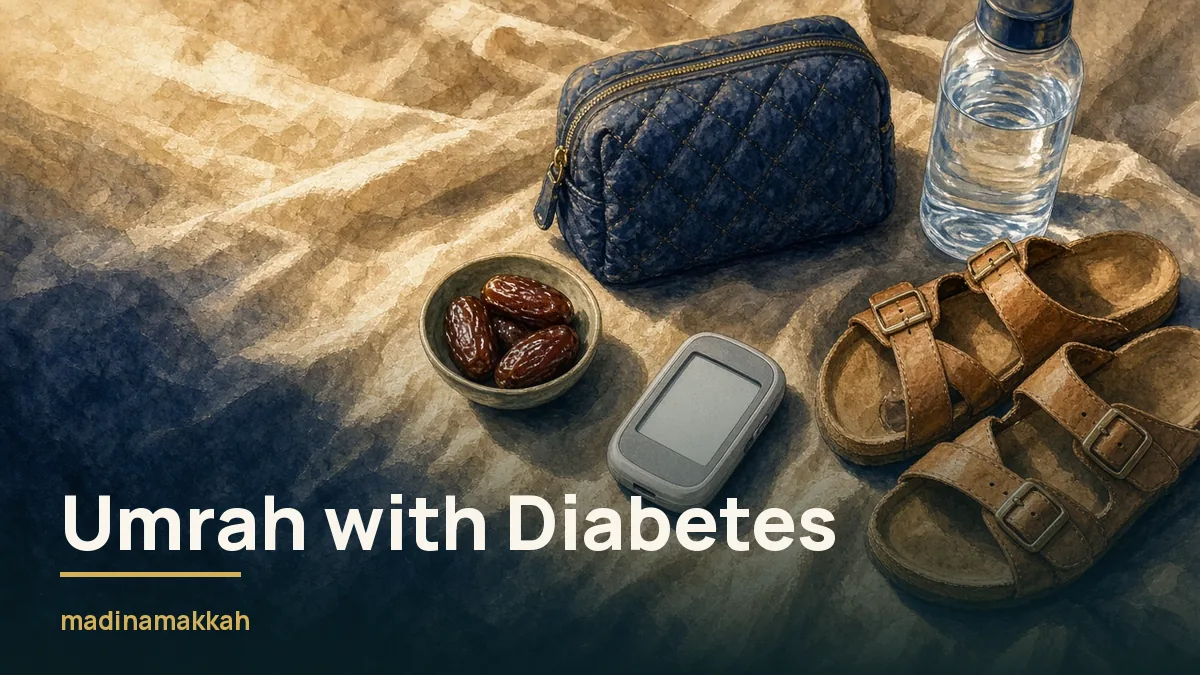
- Medical report and a list of your medicines
- Medicines in their original packaging, carried in your hand luggage
- Glucose meter, test strips and spares
- An insulated pouch for insulin, if you use it
- A sharps container or a safe way to carry used needles
- Snacks
- A refillable water bottle
- Comfortable, well-fitting footwear and clean socks for the hotel
- An electric razor, if you shave
Insulin and your meter in the heat
How do I keep insulin cool during Umrah? The Ministry advises keeping insulin cool but not placing it directly on ice. An insulated pouch and a fridge at your hotel are a practical combination. Follow your doctor’s or pharmacist’s storage advice.
The Ministry also notes that heat and humidity can affect glucose meters and test strips. Keep them out of direct sun, and don’t leave them in a hot car or bus.
Dispose of needles and lancets safely in a sharps container, never loose in a bin.
On the day of your rites
Should I eat before Tawaf? The Ministry advises diabetic pilgrims to eat before starting the rites and to carry snacks. Tawaf and Sa’i involve a lot of walking, often in crowds, and it may take longer than you expect.
Check your glucose. The Ministry advises checking it every day.
Drink water. The Ministry advises drinking water regularly and in sensible amounts to avoid dehydration.
If you feel unwell during the rites
1
Stop the rites straight away.
2
Sit down somewhere safe and let your companion know.
3
Follow the plan your doctor gave you before travel.
4
Only continue when you feel well.
5
If you don’t improve, ask the nearest mosque staff for medical help.
The Ministry advises that pilgrims stop the rites if they feel symptoms of low blood sugar. The rites can wait, and your health comes first.
Look after your feet
The Ministry advises diabetic pilgrims to protect their feet from sores and ulcers. Its advice:
- wear comfortable shoes and socks, and don’t walk barefoot;
- wash your feet daily with soap and water and dry them well, especially between the toes;
- check your feet every day for sores;
- see a doctor about any wound early.
Tell someone
The Ministry advises diabetic pilgrims to tell a companion and their group’s doctor about their condition. Make sure at least one person in your group knows:
- where you keep your medicines and snacks;
- what low blood sugar looks like for you;
- how to get help.
Our guide to caring for elderly family on Umrah has more on travelling as a group with health needs.
Warning
This guide summarises public health advice and doesn’t replace your doctor. Don’t change your medicine doses without medical advice.
FAQ
Can I carry my medicines on the plane? Keep them in their original packaging with your medical report, and check your airline’s rules before you fly.
Where do I get medical help? The Ministry advises going to the nearest health centre or hospital when needed. Our heat and crowds health guide explains how to stay well.
Should my companion know about my diabetes? Yes. The Ministry advises telling a companion and your group’s doctor.
Sources and last checked
Last checked 24 Oct 2026 against the Saudi Ministry of Health’s guidance for diabetic pilgrims, its pre-travel health guidelines and its health requirements document, and Nusuk.
Health information disclaimer
This post is general information, not medical advice. Everyone’s health is different. Speak to your doctor or pharmacist before you travel and before changing any medicine, and follow the official guidance of the Saudi Ministry of Health. For background, see the World Health Organization’s diabetes fact sheet and its heat and health fact sheet, which lists diabetes among the conditions heat can make worse.